Products
Two live, and we carry the pager for both.
Syntrigen is a product company first. These are the products we build and operate ourselves — the reason we can argue that software should be shaped to one business rather than sold to a market, and the foundation everything we build for other people starts from.
Why this page leads
Any firm can describe how it would handle a migration, an on-call rotation, or a schema change under load. We would rather point at software where we have actually had to. Zeno and Mavio run on the same deployment, tracing and evaluation setup we would build for you — which is a different kind of evidence than shipping someone else’s product and moving on.
Anything to do with signing up, pricing or a demo happens on each product’s own site. There is nothing to buy here.
01
Live
Zeno
Business platform · eight applications, one spine
Zeno is our business platform: CRM, Work, Desk, Docs, HR, Campaigns, POS and Dev, sharing one API, one database and one design system. Zeno CRM is deployed and running today; the rest are at varying stages.
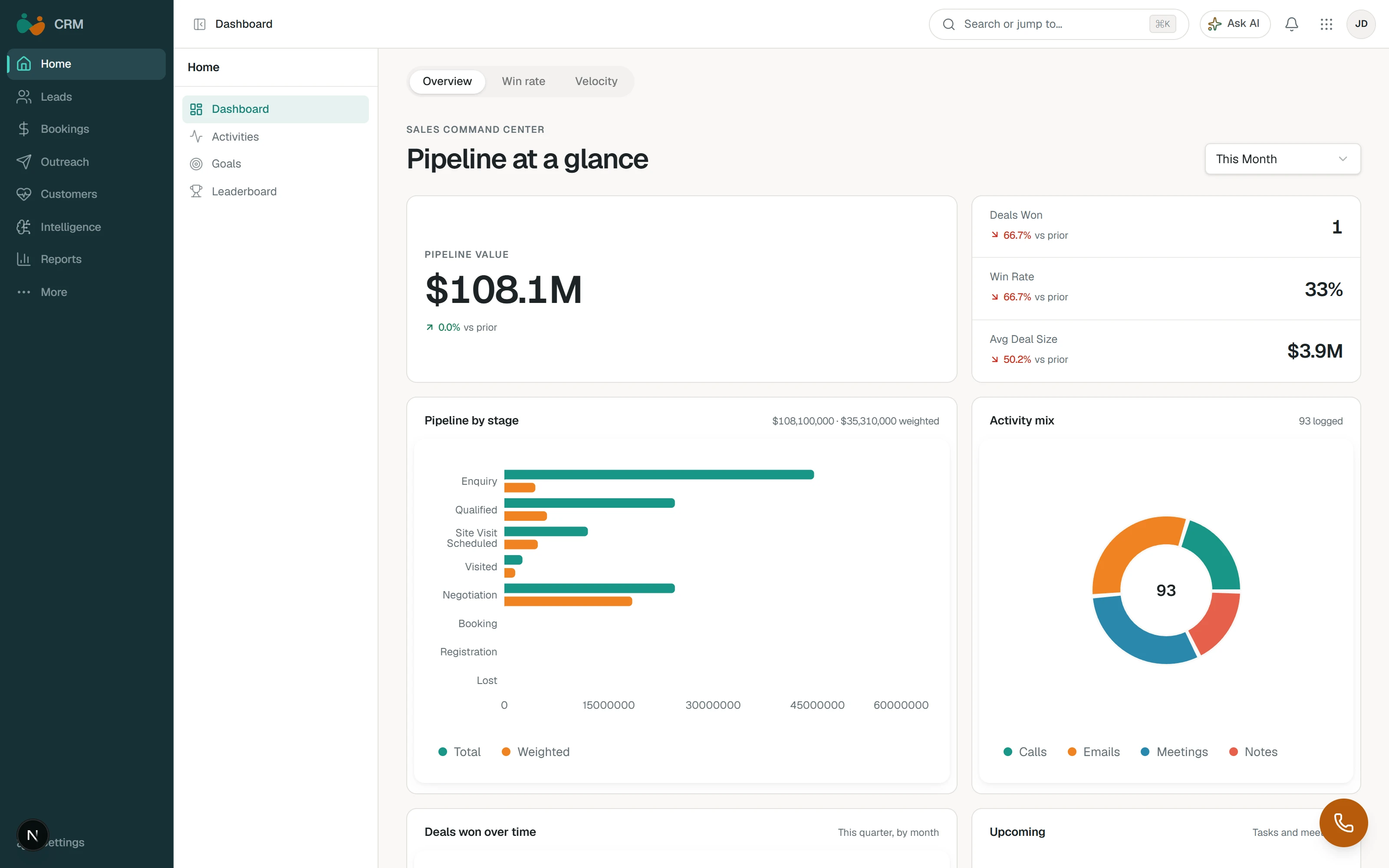
The eight applications
- CRM · live
- Work
- Desk
- Docs
- HR
- Campaigns
- POS
- Dev
What it does
It holds the customer record, the pipeline and the activity history for teams that outgrew a spreadsheet and do not want a six-month configuration project. We run it in production, which means we carry its migrations, its uptime and its support load. The interesting engineering is in what the eight applications share — which is also what makes it the starting point for a product built for somebody else.
What was hard
- Multi-tenant data model with row-level access, so a permissions mistake surfaces as a query error rather than a leak.
- Activity history is append-only, which makes the audit trail a property of the schema instead of application discipline.
- One permission model across eight applications, so moving between them does not mean relearning who can see what.
02
Live
Mavio
AI meeting notetaker · standalone product
Mavio joins the meeting, transcribes it live, and produces the notes and actions afterwards. It is the clearest example of what we mean by AI-native: take the model out and there is no product left.
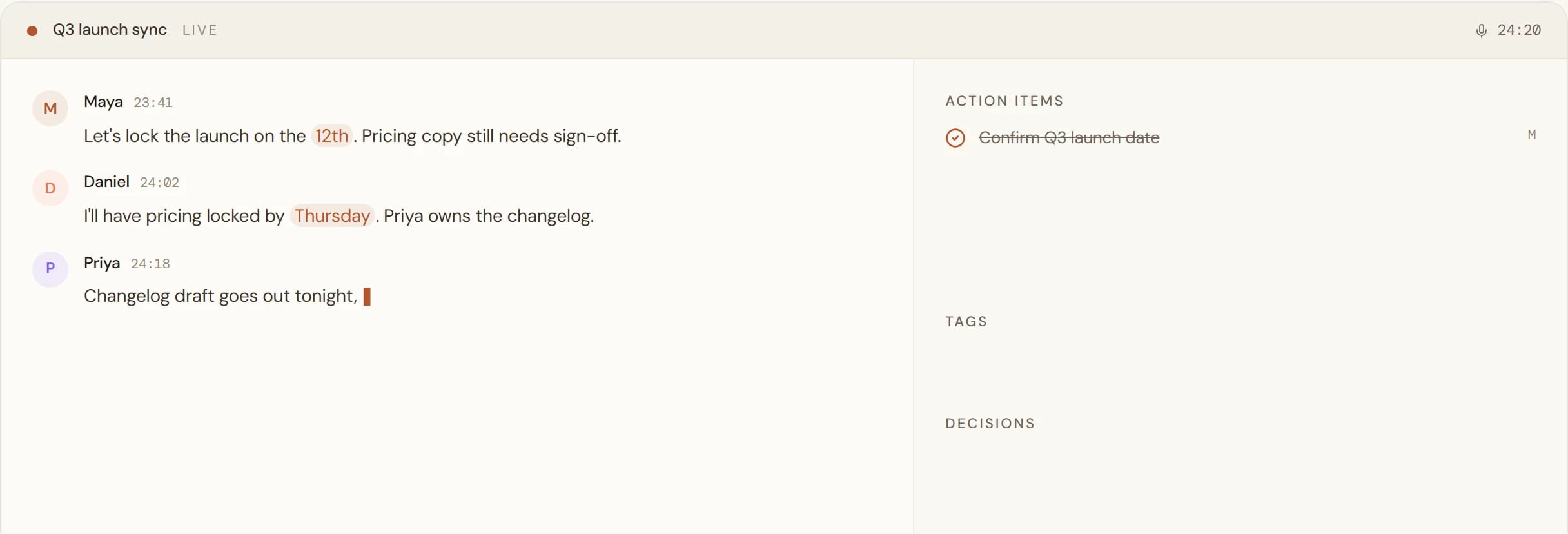
What it does
The hard part was never the transcription. It was system audio capture on two operating systems, speaker attribution over a noisy channel, and deciding what in an hour of conversation is worth writing down. It runs on infrastructure we built for it, including our own speech-to-text service that costs nothing while nobody is talking.
What was hard
- Audio arrives as a stream, so processing is incremental — notes exist before the meeting ends rather than after a batch job.
- Summarisation runs against an evaluation set of real meetings, so a prompt change that starts dropping action items fails before it ships.
- Recording, transcript and derived notes have separate retention rules, because customers delete them on different schedules.
Next
If your business needs one of these that does not exist yet, that is the conversation.
Same engineers, same infrastructure, same starting point — built around your work instead of ours, and owned by you at the end of it.